
What if the ringing could actually get quieter... by listening to music you love?
TinniQuiet uses a German sound therapy method backed by the University of Münster and tested in over 30 studies. A free 2-minute Sound Check finds your specific ringing tone. Then we take just that tone out of your music. No pills. No devices. Nothing to download.
Already a member? Get your private link here

Based on the research seen in*







Sound therapy for tinnitus, based on real science.
TinniQuiet is a sound therapy web app for tinnitus, made by The Silence Institute. It uses notched sound therapy, a method developed at the University of Münster in Germany and tested in more than 30 studies. No pill, no gadget, nothing to wear. Just music, on the phone, tablet or computer you already have.
You've probably tried things already. Supplements. White noise. Maybe a gadget from an ad that now sits in a drawer. So you're careful before you try anything new. That's smart.
That's why this page shows you everything up front: how it works, what the research says, what to expect in the first weeks, and what happens if it doesn't help you.
You may see other products online using the name "TinniQuiet", such as the Tinnito Pen, tinnitus relief pens, infrared earplugs or massage devices. Those have nothing to do with us. The real TinniQuiet is the sound therapy app on this website, made by The Silence Institute.
If you searched for "TinniQuiet" and landed here, you're in the right place. How to tell the real TinniQuiet apart
The ringing comes from your brain, not from your ears. That's where TinniQuiet works.
Most ringing starts with a small loss of hearing at one pitch, often so small you never noticed it. Your brain tries to make up for the missing sound and turns up the volume on that pitch. The nerve cells tuned to it start firing even when there is nothing to hear. That constant firing is the ringing you hear.
The nerve cells right next to them are healthy. In the TinniQuiet app we call them your Quiet Cells. Neighboring nerve cells in the hearing system can calm each other down. Scientists call this lateral inhibition. "Quiet Cells" is simply our plain-English name for those healthy neighbors and the calming they can do.
Notched music puts them to work. With your pitch taken out of the music, the overactive cells get a rest, while the Quiet Cells around them get plenty to do. In the first study at the University of Münster, brain scans showed the activity behind the ringing going down in the brain's hearing center (the auditory cortex) over months of listening.
Why white noise never fixed it
White noise works differently. It covers the ringing while it plays, like a loud fan over a smoke alarm. Turn the fan off, and the alarm is still going.
Based on the newest science of tinnitus relief, tested in over 30 studies and already used by 24,000+ people.
The method behind TinniQuiet is called notched sound therapy (also "tailor-made notched music"). It was developed at the University of Münster in Germany in 2010. Here is the proof and research behind it.





Insurers check the evidence before they spend a penny. In Germany they paid for notched music therapy. They don’t do that for things that don’t work.
Verified byGermany’s statutory health insurersCovered on prescription
Picture 10 people who lie awake with the ringing. 8 of them got real, measurable relief... in the largest trial of its kind.
Verified by440-patient double-blind trialPublished by The Lancet group, 2025
The NHS tells tinnitus patients to use sound therapy... and offers it to “retrain your brain to tune out” the ringing. America’s ear specialists put it in their official treatment guideline too.
Verified byNHS.uk+ American Academy of Otolaryngology guideline
Retraining therapy is what clinics sell as their gold standard. Music from a phone pulled ahead of it after one month.
Verified byEar and Hearing · ranked #2 of 35 hearing journalsHead-to-head trial at a world top-100 university
You’ve tried drowning it out. Masking only covers the ringing. Notched music turned it down.
Verified byRandomised hospital trialControlled · 3 months
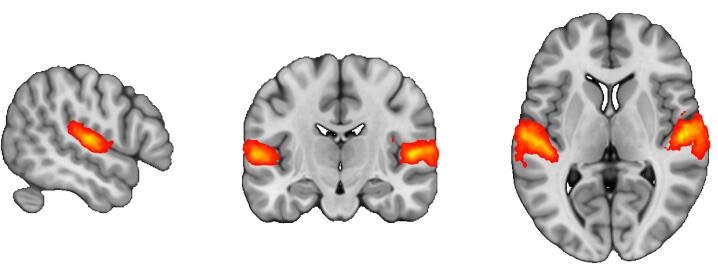
fMRI · the brain’s hearing centre in tinnitus patients
Scientists measured the brain activity behind the ringing... and watched it shrink, month after month. The dummy version did nothing.
Verified byPNASOne of the most-cited science journals on earth, founded 1914
Figures from published research on notched and sound-based tinnitus therapy.
TinniQuiet brings this method into one simple app, made to be easy at any age: one tone test, music you love, and one button to press play.
Three steps. Big buttons. No fiddling.
-
1
Find your tone
A short, gentle tone test. You tap "higher" or "lower" until the sound matches your ringing. About two minutes.
-
2
Pick your music
Gospel, country, oldies, classical, jazz, classic rock and more. TinniQuiet removes your exact tone from it, automatically.
-
3
Listen every day
At least 15 minutes a day, longer is better. Put it on while you read, cook or relax. No headphones needed: your phone or computer speaker works too. Your music sounds almost the same.






An honest timeline. Most people feel nothing in the first week.
This is the part most companies skip. We'd rather you know it now, so you don't give up right before it starts to work.
-
The first week
Often nothing you can feel
The ringing sounds the same. If you've been let down before, it's easy to think "here we go again." But the training has already started. Every session gives your Quiet Cells work to do. It happens in the background, without announcing itself.
-
The first weeks
Small signs come first
The loudness is usually the last thing to change. Look for the quieter signs: falling asleep a little easier, calmer evenings, catching yourself not checking whether it's still there.
-
If you stay with it
The first quiet moments
Moments where the ringing feels softer or further away. Or you realize you forgot about it for a while.
-
Over time
Quiet that lasts longer
Those moments come more often and last longer. In the research, the change built up over months of daily listening, not days.
Everyone's ringing is different, so we won't promise you a day. What we can promise: you have 60 days to try it, and one email gets your money back.

Simple to start. Nothing to install. No risk.
- A web app, not an App Store app. After you buy, a private link comes by email. Tap it on any phone, tablet or computer and your player opens.
- No headphones needed. Your phone or computer speaker works. Headphones are fine if you like them.
- 15 minutes a day. That's the minimum. Longer is better.
- Easy at any age. Large text, big buttons and music you already love.
- One-time payment. No subscription, no monthly fees.
- 60-day money-back guarantee. Not for you? Send one email and you get every penny back.
- On your card statement: "Whop*TinniQuiet". Whop is the payment company we use. That charge is us.
Straight answers
Is TinniQuiet legit?
Yes. TinniQuiet is a real sound therapy app made by The Silence Institute. It is based on notched sound therapy, a method developed at the University of Münster in Germany and studied in clinical trials since 2010. Every purchase comes with a 60-day money-back guarantee, and you can reach a person any time at support@mail.thesilenceinstitute.com. All the facts in one place
Is TinniQuiet a scam?
No. You can take the free Sound Check and hear your music with your tone taken out before you pay anything. TinniQuiet is a one-time payment with no subscription, and you have 60 days to get every penny back with one email. If you read a warning about a "TinniQuiet" pen or earplugs, that is a different product. It is not ours. Many scam warnings online are about the Tinnito Pen or other gadgets that get mixed up with TinniQuiet. Those are different products from different companies.
Is TinniQuiet a pen, earplugs or a massage device?
No. TinniQuiet is an app that plays music. Other sellers use the name "TinniQuiet" for pens, earplugs or massage gadgets. Those products have nothing to do with us. The real TinniQuiet runs in your web browser and is sold only through tinniquiet.com and The Silence Institute.
How does TinniQuiet work?
First, a short tone test finds the pitch of your ringing. Then you pick a music station, and TinniQuiet removes a narrow band around your pitch from that music. Listening to this notched music every day gives the healthy nerve cells next to the overactive ones work to do, so they can calm them down. Scientists call this lateral inhibition. In the app we call those healthy cells your Quiet Cells. Over time, this can help the ringing fade into the background.
How long until I notice a difference?
Most people notice nothing in the first week, and that's normal. The training starts with the first session, in the background. The first signs are usually not the loudness: falling asleep a little easier, calmer evenings, thinking about the ringing less. If you stay with it, the first quiet moments come, and they get longer over time. Everyone is different, which is why you get 60 days to try it.
How long do I need to listen each day?
At least 15 minutes a day. Longer is better. Daily listening matters more than long sessions now and then.
Do I need headphones?
No. TinniQuiet works through your phone, tablet or computer speaker. Headphones are fine if you prefer them, but you don't need them.
Is TinniQuiet clinically proven?
The method behind it has been tested in more than 30 studies since 2010, including randomized controlled trials and brain scans. TinniQuiet puts that method into a simple app for everyday use. Results differ from person to person, which is why you get 60 days to try it with a full money-back guarantee.
Is TinniQuiet FDA approved?
No. TinniQuiet is a sound therapy app for general wellness. It is not a medical device, so it is not FDA approved or cleared. The method behind it, notched sound therapy, has been studied in clinical trials since 2010. See the research
Does TinniQuiet cure tinnitus?
No. There is no known cure for tinnitus, and you should be careful with anyone who promises one. TinniQuiet is sound therapy. Its goal is to help the ringing get quieter and bother you less, so you can sleep, think and enjoy quiet moments again.
Do I need to download anything?
No. TinniQuiet works right in your web browser on any phone, tablet or computer. After you buy, you get a private link by email. Tap it, and your player opens.
Is TinniQuiet in the App Store or Google Play?
No. TinniQuiet is a web app, so there is nothing to find or install in an app store. It opens in your web browser from your private link and works on any phone, tablet or computer.
How much does TinniQuiet cost? Is it a subscription?
TinniQuiet is a one-time payment, not a subscription. You see your price at the end of the free Sound Check, before you decide.
What is "Whop*TinniQuiet" on my card statement?
That's us. Whop is the payment company we use, so your TinniQuiet purchase shows up as "Whop*TinniQuiet" on your card statement. Questions about a charge? Write to support@mail.thesilenceinstitute.com.
What if TinniQuiet doesn't work for me?
You have 60 days. If TinniQuiet doesn't help, write one email to support@mail.thesilenceinstitute.com and you get every penny back. No questions asked, no hoops to jump through.
I bought TinniQuiet but can't find my email. What do I do?
Go to the customer login at tinniquiet.com/login and enter the email address you used to buy. We send your private link again right away. It comes from tinniquiet@thesilenceinstitute.com, so if it isn't in your inbox within a few minutes, please check your Spam or Promotions folder.
How do I log in to TinniQuiet? I don't have a password.
TinniQuiet doesn't use passwords. Your private link is your key. Open it from your welcome email any time, or get it sent again at tinniquiet.com/login.
Is TinniQuiet safe?
TinniQuiet is music at a volume you choose. Keep it at a comfortable, gentle level. If your ringing started suddenly, is only in one ear, beats with your pulse, or comes with sudden hearing loss or dizziness, please see a doctor before you start any sound therapy.
Who makes TinniQuiet?
TinniQuiet is made by The Silence Institute, a small team that builds sound therapy for people living with tinnitus. You can reach us at support@mail.thesilenceinstitute.com.
Find out what your ringing tone is. It's free and takes two minutes.
At the end of the Sound Check, you'll hear your music with your own tone taken out.
Take the free Sound CheckAlready a member? Get your private link here